









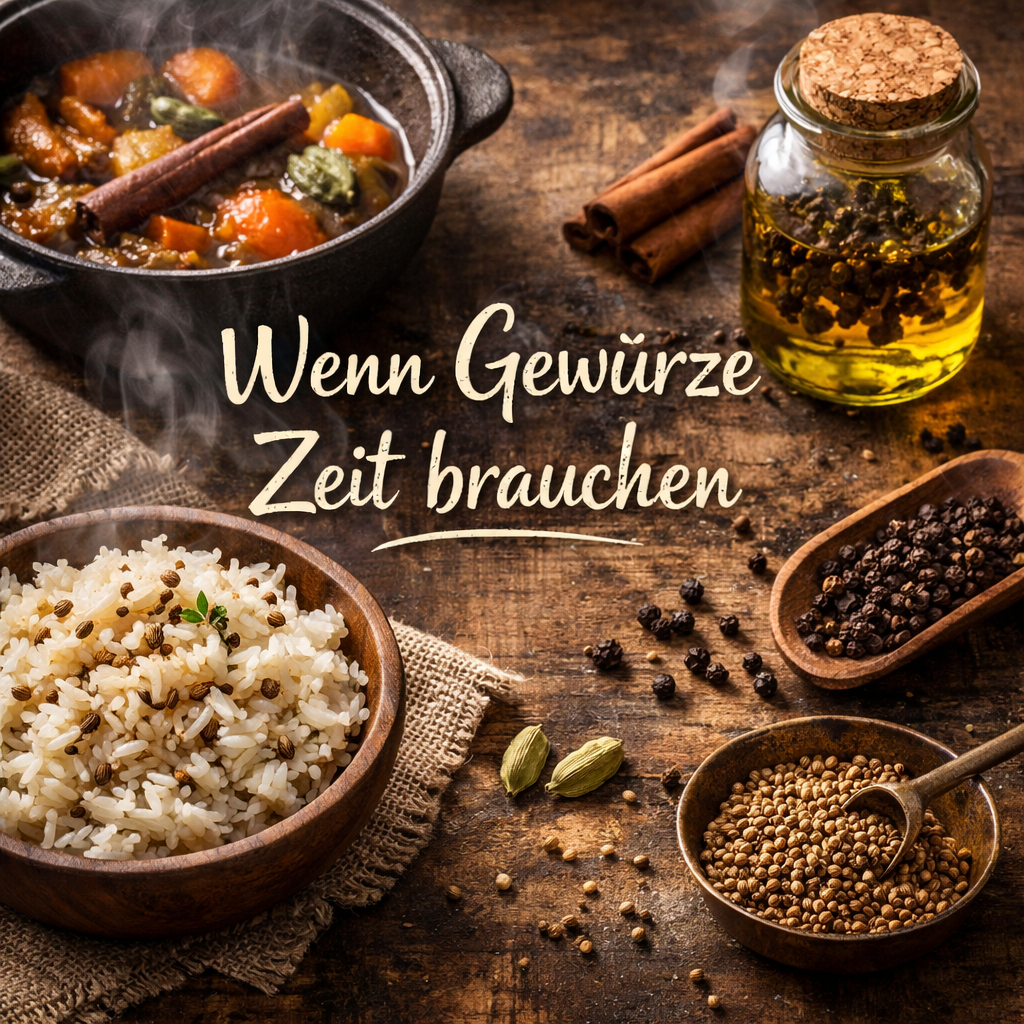
When spices need time
My grandma would have said: patience is the most important spice. In her kitchen nothing happened quickly, least of all flavour. Some things had to steep, rest, come together. Time was not a drawback but part of the recipe. Exactly the same is true of spices. Not every aroma reveals itself straight away. Some unfold slowly, quietly, and that is precisely where their depth lies.
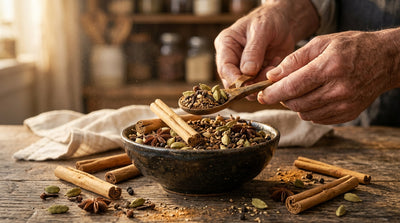
In Sri Lanka, many spices do not grow for quick use. They are made to accompany time. Cardamom, cinnamon, pepper or coriander seeds change when you give them room. They become rounder, warmer, more complex. Those who listen to them taste more.
Why slow cooking tastes different
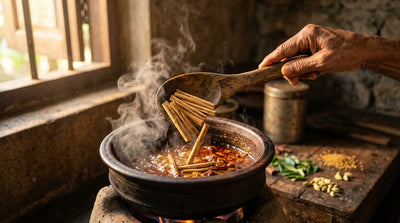
My grandma would have said: a pot tells you when it is ready. In many Sri Lankan dishes, spices are not simply stirred in but first toasted, then combined with liquid and finally cooked gently over time. Not to intensify anything, but to let balance emerge.
Slow cooking does not mean effort. It means attention. A low flame, a lid, patience. That is exactly what whole spices are made for.
Recipe 1: Gently braised vegetables with cardamom and cinnamon
A simple dish that shows how time and spices work together.
Ingredients:
- Root vegetables of your choice (carrots, sweet potato, parsnip)
- 1 small onion
- 2 cardamom pods
- 1 small piece of cinnamon stick
- Olive oil
- Salt
Method:
Roughly chop the onion and let it soften slowly in olive oil until translucent. Lightly crush the cardamom pods and toast them briefly together with the cinnamon stick until fragrant. Add the vegetables, season with salt, pour in a little water and braise, covered, over a low heat until everything is soft. Remove the spices before serving.
My grandma would have said: you are not tasting cardamom or cinnamon - you are tasting calm.
Recipe 2: Long-infused pepper oil for everyday use
A small jar that accompanies you for days.
Ingredients:
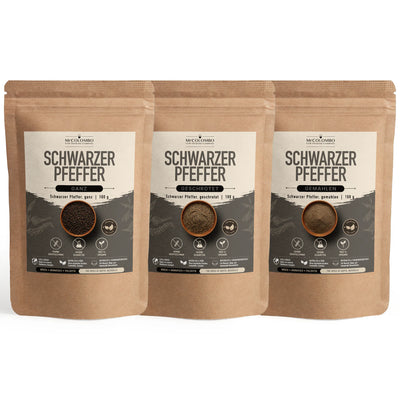
- Black peppercorns
- Mild olive oil
Method:
Roughly crush the peppercorns, place them in a jar and cover with oil. Seal and leave to infuse for at least five days. The longer it steeps, the rounder the aroma becomes.
How to use:
A few drops over roasted vegetables, pasta or bread. Not hot, but deep.
Recipe 3: Coriander-seed rice for simple evenings
My grandma would have said: rice listens when you tell it something.
Ingredients:
- Basmati rice
- 1 teaspoon coriander seeds
- Salt
Method:
Dry-toast the coriander seeds until fragrant, then crush them roughly. Cook them together with the rice. No further spice needed.
The result is not an exotic dish but a quiet companion to whatever you serve alongside it.
Understanding time as an ingredient
In Sri Lanka, time is not a luxury. It is part of everyday life. Spices are not hurried. They are allowed to be what they are. And that changes our cooking here too. When we cook more slowly, we taste more precisely. When we do less, more often happens.
My grandma would have said: you do not have to persuade good spices. You only have to listen to them.
The next time you cook, pick a spice that needs time. Let it steep, toast, accompany. Not for a special dish, but for an ordinary day. Because that is exactly where the best aromas unfold.


